About

Built by a clinician, for clinicians.

MyoWorks exists to give manual therapists tools that measure the work — not just perform it.

Manual therapy has always relied on skilled hands and trained judgment. MyoWorks adds objective data — so the change you feel in the tissue becomes something you can measure, track, and show.

Our mission is simple: build something every manual therapist should own. Each instrument we make joins one expanding platform, so the tools work together instead of piling up.

Our Story

It started at the treatment table.

MyoWorks began with a patient and a problem. The soft-tissue treatment we were using was painful enough that the discomfort was working against us — it was setting recovery back further than the therapy moved it forward.

So, mid-session, electrical stimulation was added to the soft-tissue work to ease the discomfort — combining the two into a single, more tolerable approach. It worked. That improvised moment became the seed of the tool now known as MyoOne.
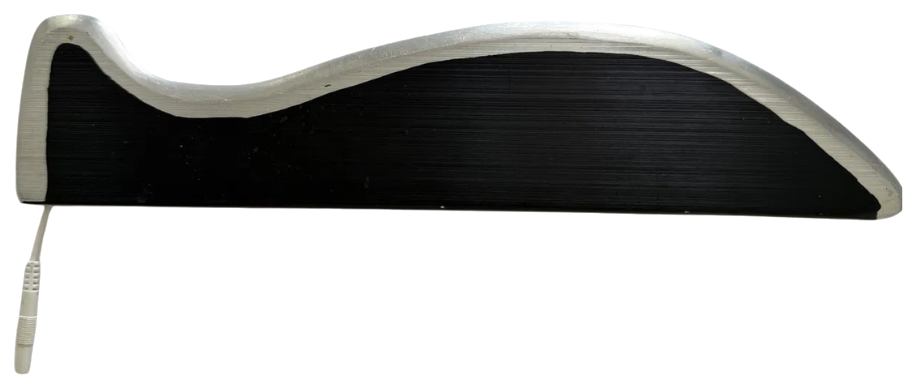
One of the earliest MyoWorks prototypes — a hand-finished blade with its electrode lead
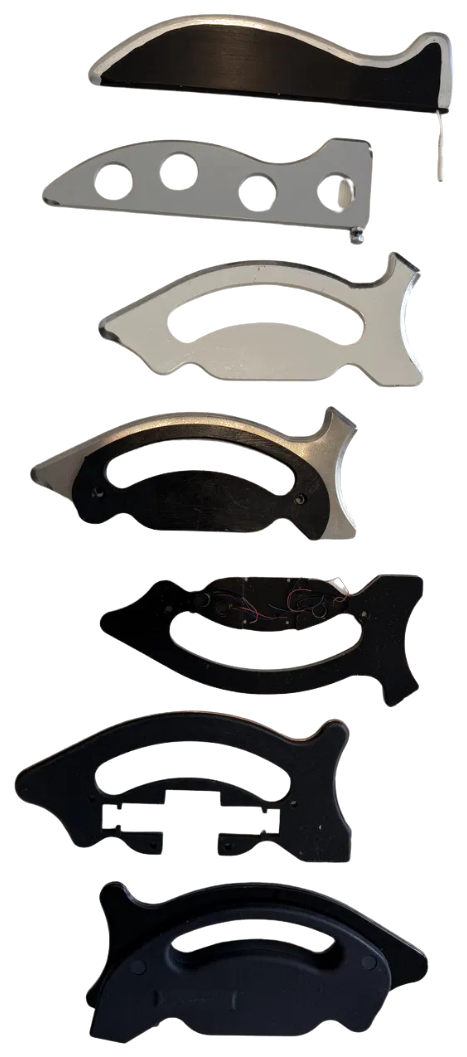
The evolution of MyoWorks, from the first raw prototype at top to the finished MyoOne at bottom
From Idea To Instrument

Built one iteration at a time.

The first real tool — V1 — was made at a small machine shop just up the road in Lodi, Wisconsin. From there came iteration after iteration, each one sharper than the last.

Then came the other half of the platform. Teaming up with software engineer Joe Scanlin — who can build almost anything you can imagine — MyoWorks brought clinical hardware and connected software together to change instrument-assisted treatment for good.

What Guides Us

One platform, one purpose.

Measure the work

Objective data should be a natural byproduct of good treatment, captured without slowing the clinician down.

One expanding platform

Every tool we build joins the same ecosystem. Additions raise the ceiling — they never dilute the focus.

Made for the work

Designed around how manual therapists actually practice — because it was built by one.